


The strongest exhibition displays are designed around a clear strategy, not chosen out of habit. As Your exhibition and brand engagement partner, Out There Branding helps businesses think beyond the display itself and look at how every message, visual and branded touchpoint can work together to attract the right people.
That is where “Strategy First. Always” comes in. From display design and stand layout to promotional products, every element of your exhibition display should support a defined outcome. This guide looks at the promotional display design best practices that help exhibitions perform better, create stronger engagement and turn attention into more meaningful conversations.
Why Display Design Matters More Than the Display Itself
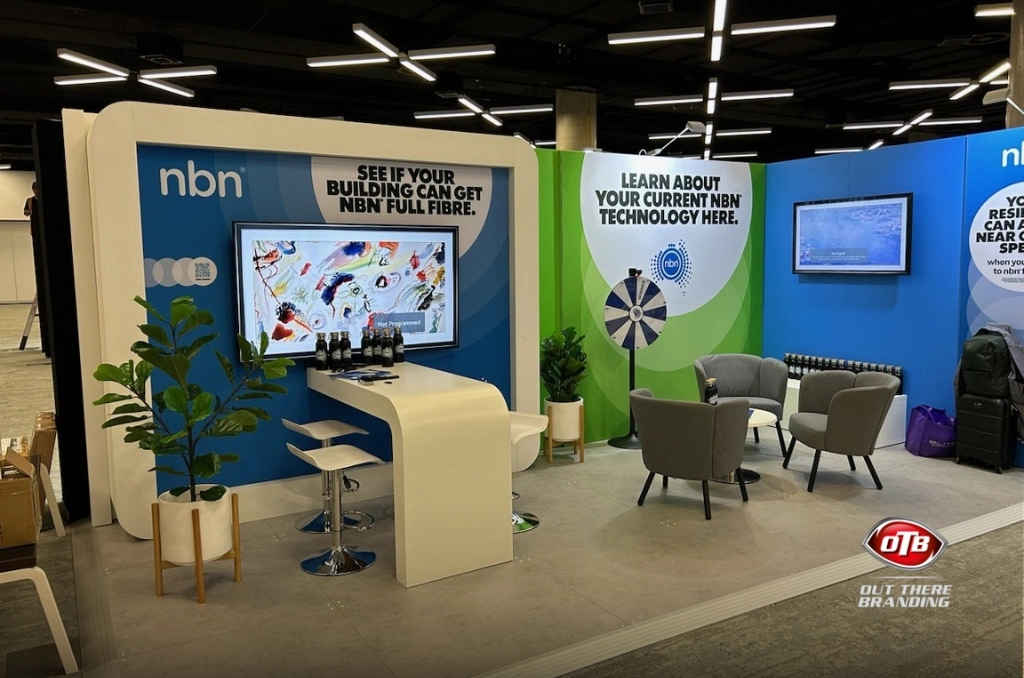
A generic pull-up banner and a bowl of branded pens rarely create meaningful results at an exhibition. In a busy event environment, your display has only a few seconds to make someone pause, understand your message and decide if the conversation is relevant to them.
Good display design helps bridge the gap between being present and creating opportunity. The most effective exhibitors treat their display as one part of a wider strategy, not an isolated purchase or last-minute design choice. Every element should support a clear goal: attracting the right people, starting better conversations and helping your brand stay remembered after the event.
Six Elements of a Well-Designed Trade Show or Exhibition Display
Before choosing hardware or graphics, it helps to work through the core elements that determine how your display will perform on the exhibition floor.
1. Design
With only seconds to capture attention, use easy-to-read fonts, on-brand colours, and a layout that guides the eye to your key message first.
2. Content
Visitors won't stop to read paragraphs. Keep messaging short and benefit-led, then let your team fill in the details in conversation.
3. Relevance
Generic messaging gets ignored. Your exhibition display should speak to the audience at that specific event, rather than relying on the same graphics for every show.
4. Call to Action
A display without a clear next step wastes the interest it generates. Give visitors a reason to act, such as booking a demo, scanning a QR code, entering a competition or requesting a follow up.
5. Contact Details
It's surprisingly common for displays to leave out a website or phone number. Keep contact details visible so interested visitors can follow up after the exhibition or event.
6. Placement
Where your display sits affects how people engage with it. You may not always control your stand location, but you can still plan around traffic flow, sightlines and how people naturally approach your space.
Common Mistakes That Undermine an Exhibition Display
Even well-funded exhibitors fall into a few recurring traps:
- Attending an event out of habit, without a clear outcome in mind that the display is meant to achieve
- Overloading the display with text instead of a single, clear message
- Leaving out contact details or a call to action, so interest generated on the day goes nowhere
Pairing Your Display With the Right Promotional Products
A well-designed display can draw people in, but the promotional products you use can influence what happens next. This is where Merch That Matters becomes important. The strongest promotional items for exhibitions are not chosen because they are popular or easy to order. They are chosen because they support a specific purpose.
For some businesses, that purpose may be brand awareness. For others, it may be pre-qualification, appreciation, follow up or starting a revenue-based conversation. A video brochure, for example, may suit a high-value prospect who needs to understand a more complex offer. A practical branded item may work better as an icebreaker for a broader audience.
The key is to start with the goal before choosing the product. Strategy First. Always. When your display and promotional products are aligned, they work as one connected brand experience rather than separate event materials.
Final Thoughts
A great tradeshow or exhibition display isn't the biggest or most expensive stand on the floor; it's the one built around a clear strategy. When design, content, relevance and placement work together, your stand gets noticed, remembered and gets results. Define your desired outcome before choosing your display, it's what separates exhibitors who get a return on investment from those who show up without one.
Ready to Make Your Next Exhibition Work Harder?
As Your Exhibition and Brand Engagement Partner, Out There Branding helps businesses plan and design exhibition displays built around strategy, not guesswork.We shape your full exhibition experience, including layout, visitor flow, competitions, promotional products, and post event planning, so every element works towards your desired goal.
Contact Out There Branding on 0421 754 560 or roy@outtherebranding.com.au to plan an exhibition display that helps you get seen, remembered and engaged with by the right people.
FAQs
What makes a promotional display stand out at an exhibition?
A display stands out when design, messaging, and placement support one clear goal: easy-to-read content, a strong call to action, visible contact details and a high-traffic position.
How do I choose between a pop-up banner and custom exhibition stands?
It depends on your budget, goals and event frequency. Portable pop-up display stands like SPUDS suit exhibitors attending multiple events, while custom exhibition stands suit larger exhibition spaces where a bespoke environment is the priority.
Do promotional giveaways still matter if I have a strong display?
Yes. A strong display draws visitors in but a well-chosen product keeps your brand in front of them afterwards. Giveaways should be useful and relevant, not chosen purely to fill a table.
How do promotional display design best practices support better exhibition results?
Promotional display design best practices help businesses create a stand that is clear, relevant and easy to engage with. Good design supports the bigger exhibition strategy by helping the right visitors understand your message quickly and take the next step.